Sunroom Design Ideas: Inspiration, Layouts, and Styles
Imagine a room where you can savor a warm cup of coffee while bathed in winter sunlight, or watch a summer thunderstorm roll in without feeling a single drop of rain. This isn’t just a daydream; it’s the daily reality of life with a sunroom—a space designed for light, comfort, and a front-row seat to the changing seasons—the kind of cozy sunrooms many homeowners love.
More than just a typical home addition, a well-designed sunroom acts as a bridge to the natural world. It’s where the best of indoor-outdoor living comes to life, creating a dedicated sanctuary for quiet mornings, a vibrant hub for family gatherings, or a personal greenhouse for your favorite plants. As many homeowners discover, the true value of these spaces lies in how they enhance daily well-being and spark ongoing sunroom inspiration.
While adding a room might seem overwhelming, breaking it down into key choices makes the process manageable. This guide to sunroom design ideas will walk you through the most important decisions, from choosing a cozy three-season retreat or a year-round living space to finding sunroom styles that perfectly match your home’s personality and collecting sunroom design ideas pictures to clarify what you love.
Creating your own sunny haven is an exciting and achievable project that adds both value and joy. Whether you’re starting fresh or planning sunroom renovations, let this guide help you turn that vision into a beautiful reality.
Summary
This guide walks you through designing a sunroom, starting with the crucial choice between a three-season and four-season build and how it impacts cost, comfort, and construction. It covers multi-purpose sunroom layouts, three popular decorating styles, and durable finishes such as UV-resistant flooring and performance fabrics, plus practical sunroom furniture choices. You’ll find practical advice on heating and cooling (HVAC, ductless mini-splits, radiant floors, fireplaces), energy-efficient windows (double-paned Low-E glass), and privacy solutions. The guide closes with an action plan to define your use, refine your style, and consult a qualified contractor.

The Most Important First Decision: Three-Season vs. Four-Season Room?
Before you start pinning paint colors or shopping for wicker chairs, your first and most critical decision is how you plan to use the space throughout the year. This choice between a three-season and a four-season room will guide your entire project, from the foundation and materials to your final budget.
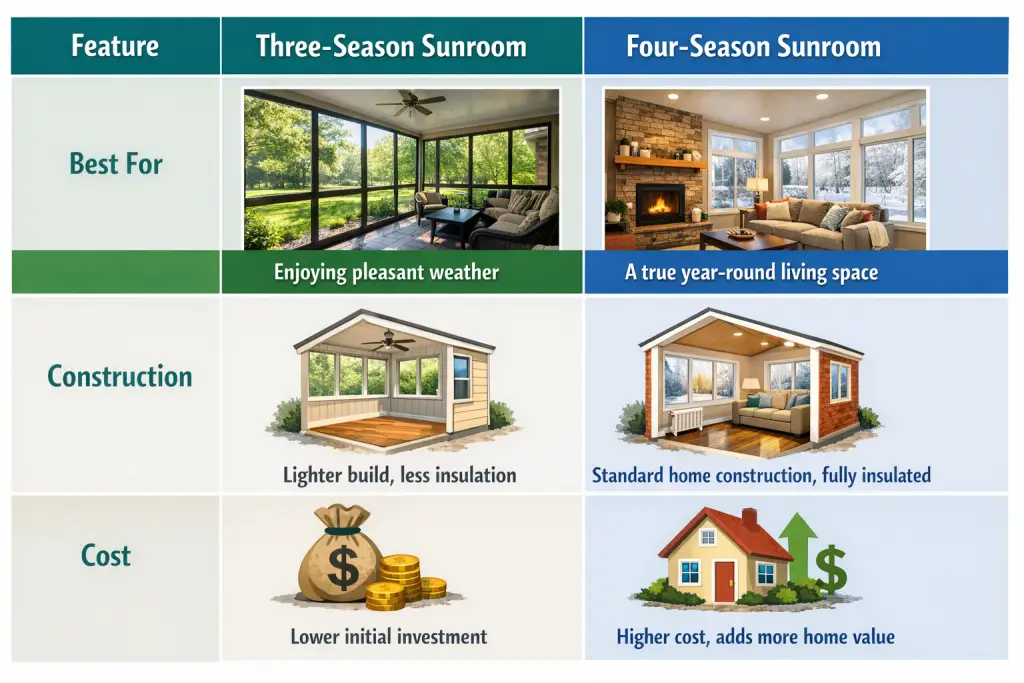
A three-season room is best thought of as a sophisticated, enclosed porch. It’s designed to be enjoyed during the milder parts of the year—spring, summer, and fall. Because it isn’t built with the heavy-duty insulation or dedicated heating and cooling of a four-season sunroom, it’s a more budget-friendly way to add a beautiful space for enjoying pleasant weather. In contrast, a four-season room is a true home addition, fully insulated and climate-controlled to be just as comfortable as your living room on the hottest summer day or coldest winter night.
To make the choice clearer, here’s a simple breakdown:
You might also hear terms like “solarium” or “conservatory.” Think of these as specific styles. A solarium is a room made almost entirely of glass, including the roof, for maximum sun exposure. A conservatory is similar but often has a more traditional look and a solid roof portion, historically used for growing plants. Both can be built to either three-season or four-season standards, making your choice of year-round use the real starting point.
What Will You Do In Your Sunroom? Ideas for a Multi-Purpose Space
The most exciting question is: what will your sunroom be for? This isn’t just about adding square footage; it’s about adding a specific experience to your home. Will it be a tranquil breakfast nook, a bright home office, a dedicated yoga studio, or a cozy reading corner? The beauty of a sunroom is its flexibility—you don’t have to choose just one purpose.
Creating a multi-purpose sunroom is all about smart furniture placement and creating “zones” for different activities; when planning sunroom layouts, you can easily blend two or even three functions without the space feeling cluttered. For example, a small bistro table and two chairs in one corner establishes a dining area. In another, a comfortable chaise lounge, a side table, and a floor lamp can create an inviting reading nook. A strategically placed area rug can anchor a conversation set, visually separating it from a collection of plants by the window.
Ultimately, your layout is what will bring your sunroom’s function to life. By defining how you’ll use the space, you make furniture and decor choices much simpler. Once you have a clear vision for the activities your sunroom will host, you can start layering on the personality.

Choosing Your Vibe: 3 Popular Sunroom Interior Design Ideas
Defining your sunroom’s personality, or “vibe,” is what turns a room full of windows into a cohesive and inviting retreat. By focusing on a specific aesthetic, you can ensure every choice works together to create the exact mood you’re after. Three popular styles are perfect for a light-filled space.
For a clean, uncluttered feel, a Modern style is a perfect choice. It focuses on simple forms, a neutral color palette of whites, greys, and charcoal, and sleek materials. For modern sunroom design ideas, think of sunroom furniture with sharp lines and minimal ornamentation, often with black metal accents that frame the outdoor view like a picture. Alternatively, a Coastal style creates a breezy, beach-house atmosphere. This look uses soft whites, sandy beiges, and hints of sea-glass blue, paired with light woods and comfortable linen fabrics to create a serene escape.
If you prefer a more relaxed and personal look, Boho-Chic might be your answer. This style is all about creating a cozy, layered sanctuary that feels collected over time. It embraces a rich mix of textures—like rattan furniture, woven rugs, and macrame wall art—paired with an abundance of houseplants in terracotta pots and warm, earthy colors. The goal isn’t perfection, but a comfortable space that reflects your personality.
No matter which sunroom styles you lean toward, choosing a color palette that complements the natural light is key. Lighter wall colors work best, as they bounce sunlight around the room and make the space feel even larger and brighter. With your walls and furnishings sorted, the next surface to consider is the one that grounds the entire space.

What Is the Best Flooring for a Sunroom?
Choosing the right floor for your sunroom is about more than just looks; it’s about durability. A sunroom floor is exposed to intense temperature swings and a constant barrage of sunlight. A key feature to look for is UV resistance, a protective quality that helps prevent materials from fading or discoloring over time. Without it, your beautiful floor could look washed-out in just a few years, especially in the spots that get the most direct sun.
For durability and style, some of the best choices are luxury vinyl plank (LVP), ceramic or porcelain tile, and engineered hardwood. LVP is a fantastic, budget-friendly sunroom finishing option that mimics wood but won’t be damaged by moisture. Tile is virtually indestructible and handles temperature changes with ease. If you love the look of real wood, engineered hardwood is a safer bet than solid hardwood, which can expand, shrink, and warp from a sunroom’s intense heat and humidity.
Beyond looks, think about comfort. A tile floor can feel wonderfully cool in summer but chilly on a winter morning. For a true four season sunroom, many homeowners opt for radiant floor heating—a system of heating coils installed under the flooring that provides a luxurious, gentle warmth from the ground up. This small upgrade can make a huge difference in how you enjoy the space on colder days.
Staying Comfortable: Your Guide to Sunroom Heating and Cooling
A room made of glass can feel like a greenhouse in July and an icebox in January if not properly equipped. Solving this comfort puzzle is the key to enjoying your sunroom every day of the year, turning a beautiful but seasonal space into a true, integrated part of your home.
For a genuine four-season space, one of the most common heating and cooling solutions is to connect the addition to your home’s main HVAC system. A more flexible and often more efficient choice, however, is a ductless “mini-split.” This is a separate, wall-mounted unit that heats and cools just the sunroom, giving you precise temperature control without straining your home’s existing systems.
For an extra touch of coziness, many homeowners are adding an electric fireplace. A modern, built-in model provides instant, clean warmth without the need for a chimney, creating a beautiful focal point. This simple addition elevates the design and makes a sunroom with a fireplace perfect for year-round use.
Finally, never underestimate the power of simple air circulation. A ceiling fan is a surprisingly effective and low-cost tool for comfort. In the summer, it creates a cooling breeze, while reversing its direction in the winter pushes warm air that has risen back down to where you can feel it.
Let the Light In (Without Losing Privacy): Window and Privacy Solutions
The windows themselves are your first line of defense in managing comfort. Ask your contractor for “double-paned, Low-E glass,” the modern standard for energy-efficient sunroom windows. Think of it like a transparent thermos for your room—the double panes create an insulating air gap, while the invisible “Low-E” coating reflects heat, keeping you warmer in the winter and cooler in the summer. This single choice has a massive impact on both your year-round comfort and your energy bills.
While all that glass is wonderful for soaking up views, you’ll also want options for privacy and controlling intense sunlight. Flowing, light-filtering curtains are a classic choice that can soften the look of the room without blocking the sun completely. For more flexibility, consider “top-down, bottom-up” shades, which let you lower the shade from the top to let light in while maintaining privacy below. Another creative solution is to use strategically placed tall plants, like Fiddle Leaf Figs or Birds of Paradise, to create natural screens.
The Finishing Touches: Furniture and Plants for Your Sunny Space
Choosing furniture is where your personal style truly shines, and thoughtful sunroom decor ties everything together. However, the constant sun that makes this room so special can also cause standard fabrics to fade. Look for modern sunroom furniture that uses performance fabrics—special, UV-resistant materials designed to stand up to direct sunlight without losing their color. Materials like wicker, rattan, and light-colored wood also create a timeless, resilient look that embraces the airy atmosphere.
For smaller sunrooms, a little design magic can make the space feel much larger. If you’re looking for small sunroom design ideas, focus on creating visual space by selecting furniture with visible legs. A sofa on stilts or an armchair with a raised frame allows your eye to see more of the floor underneath, tricking the brain into perceiving a more open and spacious room.
Finally, no sunroom is complete without a touch of green. You don’t need a green thumb to create a lush escape; you just need the right plants. For the best plants for a low-maintenance sunroom, start with these nearly indestructible options:
- Snake Plant: Tolerates a wide range of light and prefers infrequent watering.
- ZZ Plant: A glossy-leafed beauty that actually thrives on a bit of neglect.
- Pothos: A forgiving trailing vine that looks fantastic in a hanging basket.
From Dream to Reality: Your Sunroom Action Plan
Your vision for a sunroom is now more tangible. You understand the key choices, from a three-season escape versus a four-season living space to the styles and functions that fit your life. With this new clarity, you’re ready to move from inspiration to action with a few simple, focused steps.
Your First 3 Steps:
- Create an Idea Book: Save photos of sunroom layouts, furniture, and features that you love to define your personal style.
- Define Your Use: Decide if a 3-season or 4-season room best fits your needs and the primary purpose of the space.
- Talk to a Pro: Find a local contractor and ask key questions like, “Are you licensed and insured?”, “Can you share references from recent sunroom projects?”, and “Does your quote include acquiring permits?”
This isn’t just about adding square footage; it’s about shaping a future of quiet mornings, sun-drenched afternoons, and a deeper connection to the world outside your window. You’re ready to start the conversation.
Frequently Asked Questions (FAQ)
1. What is the difference between a three-season and a four-season sunroom?
A three-season sunroom is designed for use during spring, summer, and fall, with lighter construction and less insulation. In contrast, a four-season sunroom is fully insulated and climate-controlled, allowing it to be used year-round, similar to your home’s main living space.
2. How much does it cost to build a sunroom?
The cost of building a sunroom can vary widely depending on factors such as size, materials, and whether it’s a three-season or four-season room. On average, homeowners can expect costs to range from $15,000 to $50,000 or more. It’s essential to define your budget and consult with contractors for accurate estimates.
3. Can I use my sunroom for multiple purposes?
Absolutely! Sunrooms can be versatile spaces suited for various activities, including a cozy reading nook, a home office, or a dining area. By strategically arranging furniture and defining “zones,” you can easily blend different functions within the room.
4. What type of flooring is best for a sunroom?
The best flooring options for sunrooms are durable and UV-resistant. Popular choices include luxury vinyl plank (LVP), ceramic or porcelain tile, and engineered hardwood. Each option offers unique benefits in terms of aesthetics and resilience against temperature changes.
5. How do I keep my sunroom comfortable throughout the year?
To maintain comfort in your sunroom, consider installing a heating and cooling system, such as a ductless mini-split, or connecting to your home’s main HVAC. Additional options include adding radiant floor heating and using ceiling fans for air circulation.
6. What types of plants thrive in a sunroom?
Many plants thrive in sunrooms, especially if you choose low-maintenance varieties. Some popular options include Snake Plants, ZZ Plants, and Pothos, which are known for their resilience and ability to flourish in varying light conditions.
7. How can I enhance privacy in my sunroom?
You can enhance privacy in your sunroom by using light-filtering curtains, top-down bottom-up shades, or strategically placing tall plants to create natural screens. These options allow you to enjoy natural light while maintaining your privacy.
8. What are some sunroom decorating ideas?
For sunroom decor, consider using UV-resistant performance fabrics for furniture, choosing a cohesive color palette that complements natural light, and incorporating decorative accessories like rugs, art, and plants to create a warm and inviting atmosphere.