Thinking about remodeling your kitchen? One of the biggest design decisions you’ll make is choosing the right cabinets. But wait—should you go with European-style frameless cabinets or stick with the American standard framed cabinets? And what’s the deal with full overlays versus partial overlays? Let’s break it all down.

What’s the main difference between frameless and framed cabinets?
The biggest difference is in how the cabinet box is constructed.
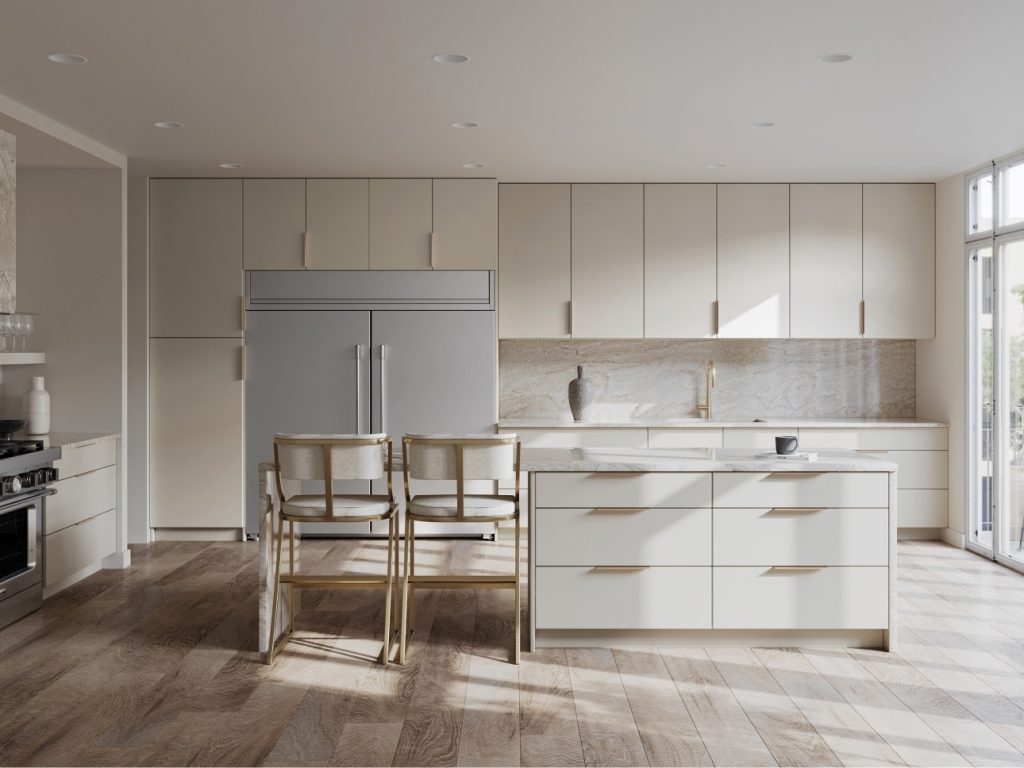
- Frameless Cabinets (European Style): These cabinets don’t have a face frame. The doors attach directly to the sides of the cabinet box, giving a sleek, modern look with minimal gaps.
- Framed Cabinets (American Standard): These cabinets have a face frame at the front of the box, creating a more traditional look. The doors attach to this frame, which can provide additional sturdiness.

Why do frameless cabinets look more modern?
Since frameless cabinets eliminate the face frame, they create a smooth, seamless appearance. This design is common in contemporary and European-style kitchens, where clean lines and a sleek finish are key.

Are frameless cabinets less sturdy?
Not necessarily! While the face frame adds some reinforcement to traditional cabinets, high-quality frameless cabinets are made with thick, durable materials to compensate. As long as you go with a reputable manufacturer, you won’t have to worry about strength.
What about storage space—do frameless cabinets offer more room?
Yes! Because there’s no face frame taking up space, frameless cabinets provide easier access and slightly more storage capacity. That extra fraction of an inch may not seem like much, but it can make a difference when storing large dishes, pots, and pans.
Okay, now what’s the deal with full overlay and partial overlay doors?

These terms refer to how much of the cabinet’s face the doors cover:
- Full Overlay: The doors completely cover the cabinet frame or box, leaving little to no gaps between doors and drawers. This is common in frameless cabinets but can also be done with framed cabinets for a more modern look.
- Partial Overlay: The doors only cover part of the cabinet frame, leaving visible gaps between doors and drawer fronts. This is a more traditional style and is typically seen in classic American kitchens.
Do full overlay doors make framed cabinets look like frameless cabinets?
Yes, to an extent! Full overlay doors on framed cabinets create a similar sleek appearance to frameless cabinets while keeping the extra sturdiness of a face frame. However, framed cabinets will still have slight gaps and structural differences compared to true frameless cabinets.
Are frameless cabinets more expensive?
They can be. Frameless cabinets often require precise manufacturing and high-quality materials, which can drive up costs. However, premium framed cabinets with full overlay doors can also be pricey, so cost depends on factors like materials, finishes, and customizations.
Which option is better for my kitchen?
It depends on your style and needs:
- If you love modern, sleek aesthetics and maximizing storage, frameless cabinets are a great choice.
- If you prefer a more traditional or transitional look with added durability, framed cabinets (with full or partial overlay) might be better suited for you.
Which Cabinet Style Wins?
There’s no one-size-fits-all answer! Frameless cabinets shine in contemporary kitchens, while framed cabinets offer timeless appeal with a bit more structural support. If you’re torn, consider a visit to a showroom to see both styles in person and decide which one speaks to your vision.
Have more questions about kitchen remodeling? Schedule your free in home consultation today!