Estimated reading time: 9 minutes
Essential Tips for Bathroom Renovation and Remodeling

Summary
In short, we outline how to plan a bathroom remodel for cost, time, and quality: expect labor to be the largest expense (40–50% of the total cost), avoid moving plumbing/electrical lines to save costs, and keep a 15–20% contingency for unexpected surprises.
A cosmetic refresh can take a weekend, but a full remodel usually spans 3–8 weeks due to logistics and lead times. Hire pros for plumbing, electrical, and waterproofing—often via a vetted general contractor—and make smart layout/material choices (keep at least one tub for resale, use drawer storage, pick waterproof floors like porcelain or LVP, low-maintenance counters, and layered lighting).
Begin with a clear goal and budget, gather inspiration, get multiple quotes, and choose your “big three” elements. Whether you’re envisioning a luxury bathroom retreat or upgrading a small bathroom, thoughtful bathroom design choices will help you balance style, function, and budget.
Starting a Bathroom Renovation
Dreaming of a fresh, modern bathroom—or a luxury bathroom —is exciting, but the thought of the final bill can be overwhelming and derail your project planning very quickly. While the average cost to update a bathroom can range from $6,000 to over $17,000, depending on the scope, understanding how that money is allocated and how bathroom design choices impact costs is the first step toward discovering the right bathroom renovation for you.
Think of your budget like a pie. The largest slice isn’t for the sparkling new fixtures, but for the skilled labor that puts it all together. Home renovation experts suggest breaking down costs this way:
- Labor: 40-50%
- Materials (Tile, Drywall, Flooring, etc.): 30-40%
- Fixtures (Faucet, Toilet, Lights): 15-20%
You may think smaller bathroom remodels should be proportionally less than larger bathroom remodels but that isn’t always the case. Each bathroom has one toilet, has a vanity, has a wet area. The only thing that differs is the amount of extra material you may need such as flooring, drywall, and the size of a vanity. The rest is still the same no matter if your bathroom is a 5’x8′ or a 10’x12′
That labor percentage is the primary cost driver, and it jumps significantly if you start moving plumbing or electrical lines. Shifting a toilet to another wall, for instance, can add thousands to your bill. You must also set aside a contingency fund of at least 15-20% for surprises like hidden water damage.
So, where can you realistically save? For small bathroom remodel ideas on a budget , focus on cosmetic items like mirrors, light fixtures, or paint that fit your bathroom design and can be easily updated later. Never skimp on foundational work! Proper waterproofing and knowing how to tile a bathroom floor correctly (or hiring a pro who does) are investments that prevent expensive repairs down the road. If you can tackle small things like towel bars, mirrors and toilet paper holders, these will save you a few hundred bucks.
How Long Does a Bathroom Remodel Really Take?
One of the first questions on every homeowner’s mind is, “How long will I be without a shower?” The answer depends entirely on your project’s scope. A simple cosmetic refresh—new paint, faucet, and light fixture—might only take a long weekend. But a full gut renovation where walls are opened and fixtures are moved, is measured in weeks, not days.
For a full remodel, the timeline for a bathroom renovation and remodeling is less about physical work and more about logistics. Your project happens in phases, and each step can sometimes require a different professional like a plumber or electrician, so coordinating schedules for outside contractors is what stretches a project out. A short delay in one area creates a domino effect, pushing back everything that follows.
Most people are surprised that demolition is often over in a day, while the precise work of tiling and grouting can take a full week. Realistically, plan for three to eight weeks of active construction for a standard bathroom, and that doesn’t include the weeks or months of planning beforehand!
The Big Decision: Should You Hire a Contractor or Go It Alone?
Your next major choice is who will actually do the work? Tackling some tasks yourself is a fantastic way to save money, such as cosmetic updates: painting, swapping out a light fixture, or changing cabinet hardware. These are perfect weekend projects! However, jobs involving plumbing, electrical wiring, or waterproofing are best left to licensed and insured professionals since a small mistake here can lead to major, expensive damage later.
For a full remodel involving multiple specialists, hiring a Bathroom Remodeling Company is often the smartest move. A bathroom remodeler acts as the project’s head coach, coordinating the entire team of plumbers, electricians, and installers, ensuring everyone shows up in the right order and that the work meets quality standards. This management prevents the scheduling nightmares that can derail a project and lets you simply focus on the fun bathroom design decisions!
Whether you hire a GC or individual tradespeople, vetting should be non-negotiable. Before signing any contract, use this short guide to get clear answers to a few critical questions.
3 Must-Ask Questions for Any Bathroom Contractor:
- “Are you licensed and insured? Can I see proof?”
- “Can you provide 3 recent references for similar bathroom projects?”
- “How do you handle project changes or unexpected problems?”
This simple screening process protects your investment and gives you peace of mind.

Shower vs. Tub: Making High-Impact Choices for Layout and Storage
One of the first big layout decisions is the shower-versus-tub debate. While a luxurious, shower-only master bathroom is tempting for a spa bathroom look, consider resale value. Real estate experts agree that having at least one bathtub in the home is crucial for attracting the widest range of buyers, especially families with young children. If this is your home’s only full bathroom, keeping a tub-shower combo is often the safest bet.
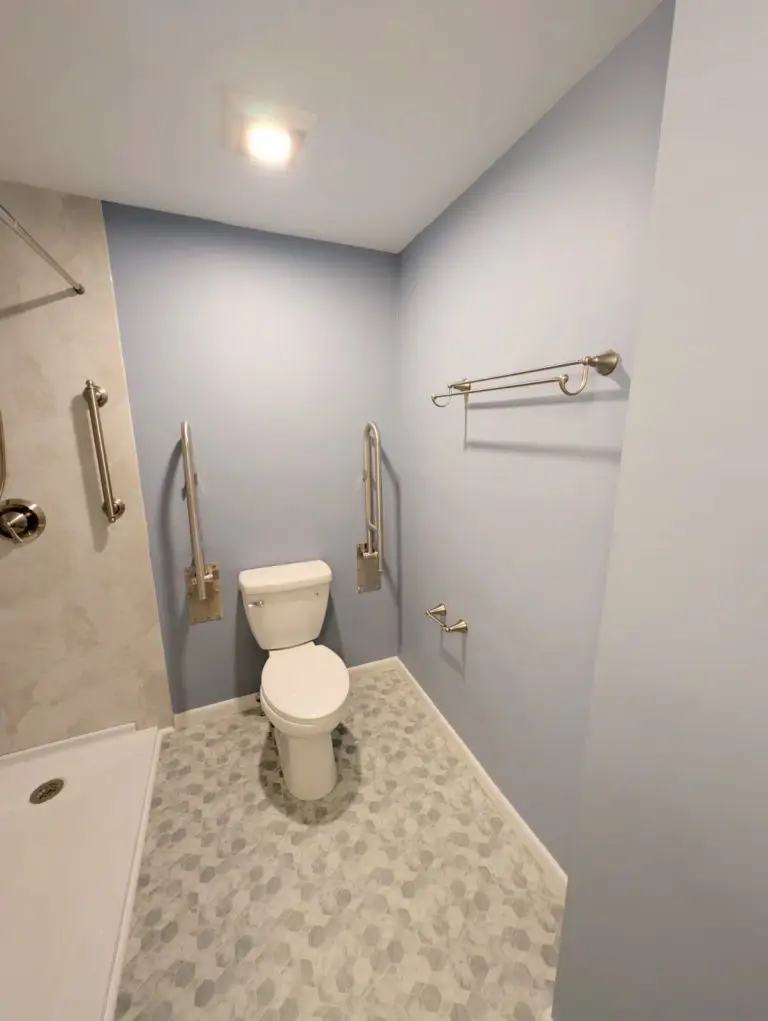
That said, modern walk-in showers offer compelling benefits: removing the high curb of a traditional tub not only makes the room feel more open and spa-like but also significantly improves accessibility. This forward-thinking approach is known as ‘aging-in-place’ design, creating a bathroom that’s safer and more comfortable for everyone, regardless of age or mobility.
Just as important as the big fixtures is your daily storage. To finally conquer countertop clutter, choose a vanity with deep drawers instead of cavernous cabinets where items get lost and disorganized. Drawers bring everything into full view, maximizing usable space and streamlining your morning routine.

Choosing Materials That Last: Floors, Countertops, and Lighting
With your layout set, it’s time to choose the surfaces that bring your bathroom design vision to life. Your bathroom floor faces a constant battle with water, so this is an important choice and the best waterproof bathroom flooring options are Luxury Vinyl Plank (LVP) and second large porcelain tile. While both are 100% waterproof, meaning splashes won’t ever damage the structure underneath, porcelain tile does have grout, which is porous. The maintenance involved with tile is significantly more involved than an LVP floor, which is practically maintenance free. But both of these materials offer peace of mind that other beautiful but less-suited materials, like hardwood, simply can’t provide.
Durability of your vanity countertops has sparked the debate over quartz vs granite bathroom countertops and required maintenance. Granite is a stunning natural stone, but it’s porous and can stain unless it’s sealed periodically. Some engineered quartz, however, is completely non-porous. This makes it virtually stain-proof and requires zero upkeep—a huge plus for a busy bathroom.
The right lighting can completely transform the room’s atmosphere: instead of a single, harsh ceiling light, experts recommend a layered approach. Combining bright modern bathroom lighting fixtures at the vanity for tasks, a general overhead light for brightness, and a dedicated waterproof light in the shower creates a space that feels larger and more functional.
Your 4-Step Action Plan to Start Your Renovation
A successful renovation begins long before demolition day. By setting a clear goal, defining your budget, and building your team before choosing materials, you can transform your space with confidence.
Use this master bathroom renovation checklist to begin your bathroom renovation and remodeling:
- Define Your #1 Goal & Budget.
- Gather Inspiration (Create a Pinterest board!).
- Talk to the Pros (Get 3+ quotes).
- Pick Your “Big Three” (Vanity, Tub/Shower, Tile).
Your dream bathroom is no longer a distant “someday”—it’s a plan waiting for you to take that first step.

Frequently Asked Questions (FAQ)
1. How much does a bathroom renovation typically cost?
The average cost of a bathroom renovation can range from $6,000 to over $17,000, depending on the size of the bathroom and the extent of the renovation. Labor usually constitutes 40-50% of the total budget, while materials and fixtures account for the rest.
2. How long does a bathroom remodel usually take?
A simple cosmetic update can take a weekend, while a full renovation can span from 3 to 8 weeks. The duration largely depends on the scope of the project and the coordination of various tradespeople involved.
3. Should I hire a Bathroom Remodeler for my renovation?
Hiring a bathroom remodeler is often recommended for complex projects involving multiple specialists. A bath remodeler can manage the scheduling and ensure quality work while allowing you to focus on design choices.
4. What are some cost-effective ways to renovate a small bathroom?
To save on costs, consider focusing on cosmetic changes like updating light fixtures, mirrors, or paint. Avoid moving plumbing or electrical lines, and opt for versatile materials that provide longevity without breaking the bank.
5. What are the best materials for bathroom flooring?
For waterproof flooring options, porcelain tiles and Luxury Vinyl Plank (LVP) are great choices as they can withstand moisture and require minimal maintenance. Avoid hardwood, which can be damaged by water over time.
6. Is it essential to have a bathtub in the bathroom?
Having at least one bathtub is advisable, especially for homes with young children, as it enhances resale value. If space allows, a tub-shower combo can provide versatility.
7. What lighting should I choose for my bathroom?
A layered lighting approach is best for functional bathroom design. Combine task lighting at the vanity, general overhead lighting, and dedicated waterproof lighting for the shower to create a functional and inviting atmosphere.
8. How can I maximize storage in a small bathroom?
To maximize storage, choose a vanity with deep drawers instead of cabinets. This allows you to keep items organized and easily accessible, reducing countertop clutter.