Top Trends in Delaware Bathroom Remodeling

A bathroom remodel can feel overwhelming, with questions about cost, timelines, and who to trust swirling in your mind. This guide demystifies the process for Delaware homeowners by breaking the project down into a manageable framework: from building a realistic budget to making smart material choices, you’ll gain the confidence needed to avoid common pitfalls and turn your vision into a stress-free reality!
Summary
Delaware homeowners can expect a professional bathroom remodel to cost roughly $15,000–$35,000+, driven by layout changes, material quality, and project scope. You should hire a licensed, insured general contractor who uses written change orders and manages permits to ensure a smooth, code-compliant project. Value-forward trends include tub-to-shower conversions, waterproof wall panels, and curbless showers, while small spaces benefit from floating vanities, large mirrors, and recessed medicine cabinets. Start with a clear goal, set a realistic budget and then vet multiple licensed Delaware contractors before making the first call.
What’s the Real Average Cost of a Bath Remodel in DE?
While you might see ads for low-cost professional bathroom remodels in a Delaware, typically a full bathroom falls in the $15,000 to $35,000+ range. The final price tag is driven by a few key factors, and understanding them is the key to building a realistic budget.
The biggest drivers of cost are:
- Moving Walls or Plumbing: Keeping your toilet, sink, and shower in the same spot saves thousands in labor.
- Material Quality: A stock vanity and basic ceramic tile will cost significantly less than a custom vanity with a marble countertop and intricate tile work.
- The Scope of Labor: A simple “cosmetic refresh” is much different from a full “gut renovation.”
A cosmetic refresh involves new paint, a new faucet, and updated lighting. A gut renovation, on the other hand, means tearing everything out to the studs and starting from scratch. While more expensive, it allows you to fix hidden issues and create the exact layout you want.
A trustworthy contractor will help you navigate these costs to match your vision and budget. Knowing your project’s scope is also the first step to exploring financing options for a home improvement project.
How to Hire a Bathroom Contractor in Delaware (And Avoid Nightmares)
For any project beyond a simple coat of paint and a new faucet, you’ll want to hire a General Contractor (GC). The GC acts as the quarterback for your remodel, managing all subcontractors like plumbers and electricians, ordering materials, and keeping the project on schedule. This single point of contact is essential for a smooth renovation.
Before discussing your vision, ask any potential hire: “Are you licensed and fully insured?” A contractor’s insurance protects you from financial liability if a worker is injured on your property. You should always verify a contractor’s professional license on the official Delaware Division of Professional Regulation website.
Once that’s confirmed, ask to see a portfolio and speak with a recent client to verify their quality of work. Also ask, “How do you handle project changes?” A professional will use “change orders”—written documents you both sign to approve new work or costs. This process prevents surprise charges on the final bill.
Hiring the right General Contractor is less about finding a laborer and more about choosing a partner who will guide you through complex decisions and ensure quality.
3 Delaware Bathroom Trends That Balance Style and Long-Term Value
With a trusted professional on your team, you can explore upgrades that add both daily enjoyment and lasting value. Many Delaware homeowners are choosing smart, functional trends that will serve them well for years.
One of the most popular updates is the tub-to-shower conversion . Removing an old, unused bathtub and replacing it with a spacious walk-in shower can make a bathroom feel significantly larger and more modern. While the tub-to-shower conversion cost in Delaware is a key consideration, it’s an investment that boosts accessibility and comfort.
Inside these new showers, many homeowners are rethinking the walls. Instead of traditional tile, consider waterproof wall panels . These large, solid sheets create a seamless, watertight surface. The biggest advantage of waterproof bathroom wall panels vs. tile is the elimination of grout, which means no more scrubbing mildew.
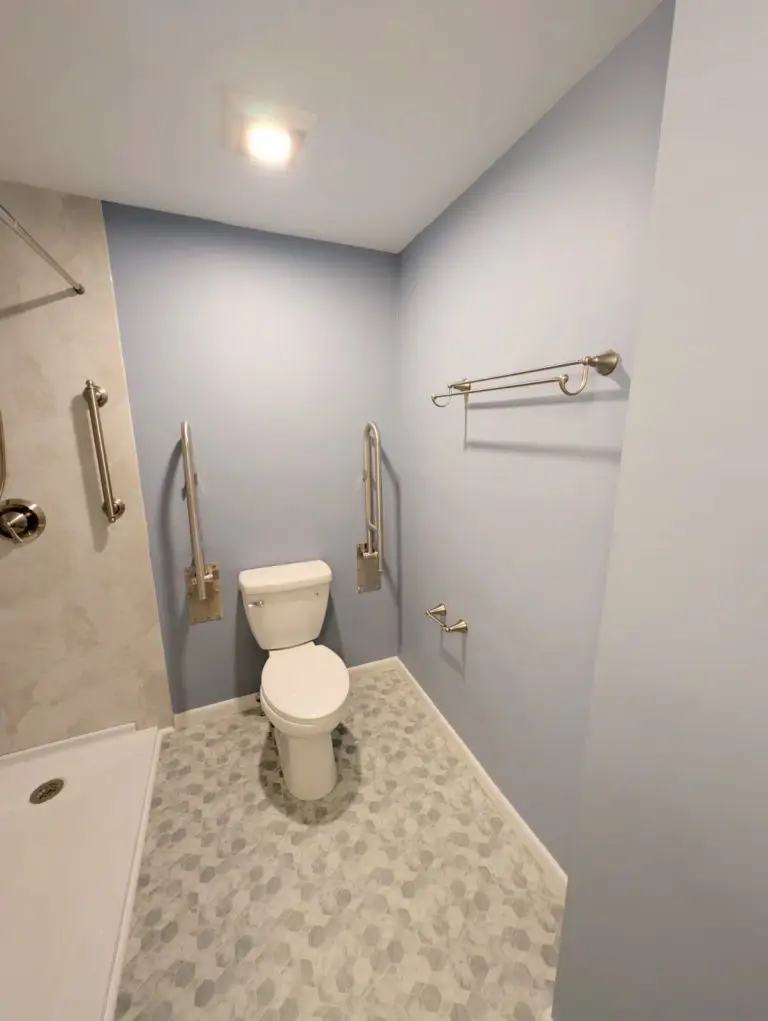
For a touch of accessible luxury, a curbless shower is the gold standard. This design removes the curb, creating a seamless flow from the bathroom floor into the shower. Beyond being a hallmark of luxury bathroom design in Wilmington, DE , this feature aligns with ADA-compliant principles by creating a safer, trip-free entry for all ages.

Big Ideas for Small Bathroom Renovations in Delaware
Many Delaware homes have bathrooms that feel tight. A fantastic trick for these spaces is installing a floating vanity. Unlike a traditional cabinet, this style mounts directly to the wall, and seeing more of the floor creates a powerful illusion of space. It’s a key feature in many modern small bathroom renovation ideas in Delaware.
Above the vanity, opt for a large, simple mirror to reflect light and add depth. For storage without the bulk, a recessed medicine cabinet is a perfect solution. This storage is built into the wall between the studs, so it sits nearly flush instead of jutting out over your sink.
These smart swaps create a more open feel without the expense of moving walls. Combining them with durable, light-colored flooring is also one of the best bathroom flooring for resale value strategies you can employ.

Do You Need a Permit for a Bathroom Remodel in Delaware?
The question of cutting into a wall leads directly to a big one: do you need a permit? As a rule, if you’re just swapping fixtures in the same spot, you likely don’t. But the moment you move plumbing, alter electrical wiring, or change the room’s layout, a building permit is almost certainly required.
While a permit adds a step to the bathroom renovation timeline estimate , it exists for your protection. It ensures all work meets current Delaware building codes, guaranteeing your plumbing won’t leak and your electrical work won’t become a hazard. It’s an official inspection that verifies the job was done right.
Your licensed General Contractor is responsible for knowing the specific rules for New Castle, Kent, or Sussex County and will manage the entire permitting process for you. Your only job is to ask them upfront if a permit is needed.
Your Delaware Bathroom Remodel: 5 Steps to Get Started
By planning first, you can turn an overwhelming project into a clear path forward. This simple checklist is your guide to turning ideas into action:
- Define Your #1 Goal: More storage, a better look, or fixing a problem?
- Set a Realistic Budget Range: Know your numbers before you shop.
- Gather Inspiration: Collect images that define your style.
- Research 3 Licensed Delaware Contractors: Vetting is your most important job.
- Make the First Call: This is the final step of your initial plan.
By following this order, you’re not just asking for a quote; you are starting a confident conversation. You’ll know what you want, what you can spend, and what to ask to get a realistic project estimate. With this plan, you’re ready to turn your vision into a reality.

Frequently Asked Questions (FAQs)
1. What is the average cost of a bathroom remodel in Delaware?
The average cost for a professional bathroom remodel in Delaware typically ranges from $15,000 to $35,000+, depending on factors like project scope, material quality, and whether any structural changes are made.
2. Do I need a permit for my bathroom remodel?
Yes, if you plan to move plumbing, alter electrical wiring, or make significant layout changes, a building permit is generally required. Your licensed General Contractor will handle the permitting process.
3. What should I look for when hiring a bathroom contractor?
Ensure the contractor is licensed and insured, review their portfolio, and ask for client references. It’s also important to understand how they manage project changes and whether they provide written change orders.
4. What are some popular design trends for bathroom remodeling in Delaware?
Current trends include tub-to-shower conversions, waterproof wall panels, curbless showers, floating vanities, and recessed medicine cabinets to maximize space and improve functionality.
5. How long does a bathroom remodel typically take?
The timeline for a bathroom remodel can vary, but most projects take anywhere from a few weeks to a couple of months, depending on the complexity of the remodel and contractor schedules.
6. Can I DIY my bathroom remodel?
While some minor updates can be done DIY, more complex projects (like plumbing or electrical work) are best left to licensed professionals to ensure safety and compliance with building codes.